
The Trumpeter Swan (Cygnus buccinator) is the largest native waterfowl in North America, with a mass of up to 30 pounds. Plumage in adults is entirely white, and juveniles are mouse-gray. The bill is black, with a triangular patch of black facial skin between the eyes and the bill. They are an average of 5 feet in length, weigh an average of 17 to 28 pounds, and have a wingspan of approximately 6.5 to 8 feet. Their neck is as long as their body, which is used to reach food at the bottom of lakes and ponds. The head profile of a Trumpeter Swan is more wedge-shaped than that of related Tundra Swans, sloping straight from the eyes to the tip of the beak. A deep-tone trumpet voice is characteristic of Trumpeter Swans.
Overview
- Species Common Name Trumpeter Swan
- Species Scientific Name Cygnus buccinator
- State Listing Status Sensitive
Ecoregions
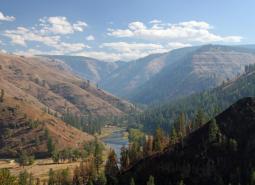
Blue Mountains
Located in NE Oregon, the Blue Mountains ecoregion is the largest ecoregion in the state. It provides a diverse complex of mountain ranges, valleys, and plateaus that extend beyond Oregon into the states of Idaho and Washington.
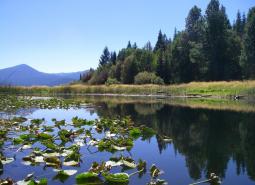
East Cascades
The East Cascade ecoregion extends from the Cascade Mountains' summit east to the warmer, drier high desert and down the length of the state. This ecoregion varies dramatically from its cool, moist border with the West Cascades ecoregion to its dry eastern border, where it meets sagebrush desert landscapes.
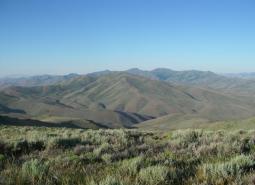
Northern Basin and Range
The Northern Basin and Range ecoregion covers the very large southeastern portion of the state, from Burns south to the Nevada border and from the Christmas Valley east to Idaho. It is largely a high elevation desert-like area dominated by sagebrush communities and habitats.