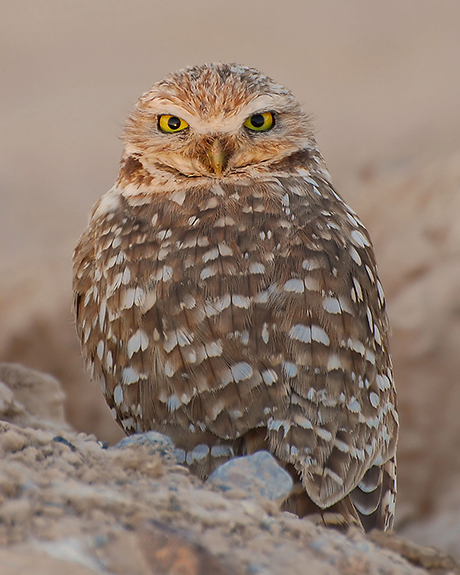
The Burrowing Owl (Athene cunicularia hypugaea) is a small, ground-nesting owl that measures 19 to 25 centimeters in length and weighs between 150 and 170 grams. It lives in grassland and shrubland habitats. Its small size, diurnal behavior, and habit of bobbing its head make it easy to recognize and hard to confuse with any other owl species in Oregon or the rest of the United States.
The owl has a rounded head with no ear tufts and bright yellow eyes. Its feathers are buff-brown with white spots or streaks. They have long legs with small feathers that end in bristles above the feet. Males and females lare similar in appearance, though males are, on average, about 3% larger. Juveniles start out with solid buff-colored breasts, but after their first molt they look similar to adults.
Overview
- Species Common Name Western Burrowing Owl
- Species Scientific Name Athene cunicularia hypugaea
- Federal Listing Status Species of Concern
- State Listing Status Sensitive
Ecoregions
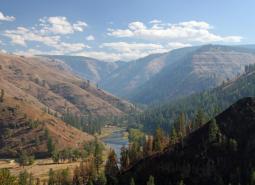
Blue Mountains
Located in NE Oregon, the Blue Mountains ecoregion is the largest ecoregion in the state. It provides a diverse complex of mountain ranges, valleys, and plateaus that extend beyond Oregon into the states of Idaho and Washington.
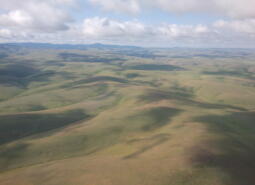
Columbia Plateau
The Columbia Plateau ecoregion was shaped by cataclysmic floods and large deposits of wind-borne silt and sand earlier in its geological history. It is dominated by a rolling landscape of arid lowlands dissected by several important rivers, and extends from the eastern slopes of the Cascades Mountains, south and east from the Columbia River to the Blue Mountains.
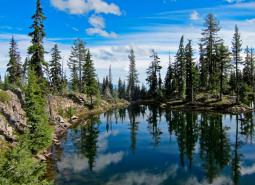
Klamath Mountains
The Klamath Mountains ecoregion covers much of southwestern Oregon, including the Klamath Mountains, Siskiyou Mountains, the interior valleys and foothills between these and the Cascade Range, and the Rogue and Umpqua river valleys. Several popular and scenic rivers run through the ecoregion, including the Umpqua, Rogue, Illinois, and Applegate rivers. Historically, this ecoregion is known …
Northern Basin and Range
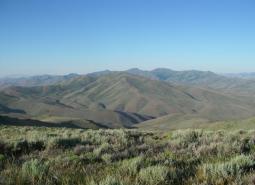
The Northern Basin and Range ecoregion covers the very large southeastern portion of the state, from Burns south to the Nevada border and from the Christmas Valley east to Idaho. It is largely a high elevation desert-like area dominated by sagebrush communities and habitats.