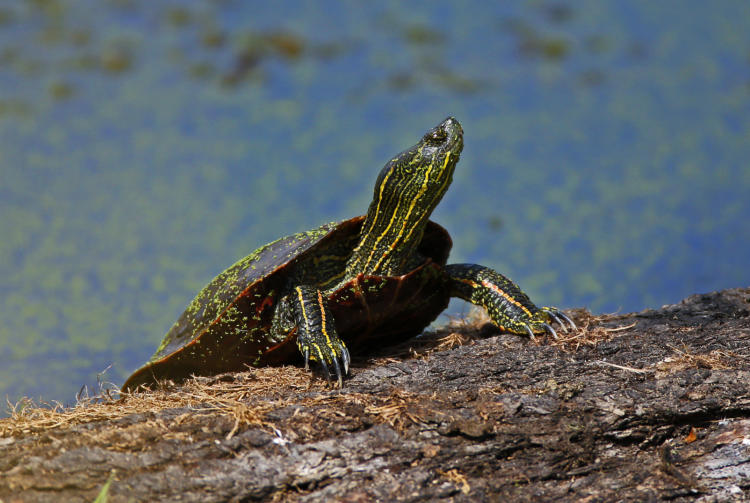
Western painted turtles are one of Oregon’s two native freshwater turtle species, named for their bright, colorful markings. Their plastron (the underside of their shell) is bright red or orange. Each individual has a unique black pattern on their plastron. Their smooth, relatively flat carapace (upper shell) is dark green, brown, or black overall. The margin of the shell is smooth, typically with bright red and yellow markings. Beneath their shell, western painted turtles are overall olive green to dark brown in color with contrasting bright yellow striping on the legs and neck. Female painted turtles have short, thin tails and can
grow up to 10 inches in length. Males are smaller than females at their full adult size, growing up to 6 inches. Males have long tails with a wide base. Western painted turtles can often be seen in slow-moving, shallow water basking in large groups.
Overview
- Species Common Name Western Painted Turtle
- Species Scientific Name Chrysemys picta belli
- State Listing Status Sensitive
Ecoregions
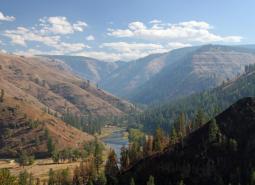
Blue Mountains
Located in NE Oregon, the Blue Mountains ecoregion is the largest ecoregion in the state. It provides a diverse complex of mountain ranges, valleys, and plateaus that extend beyond Oregon into the states of Idaho and Washington.
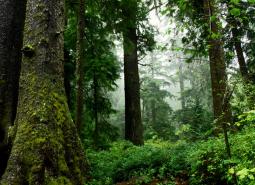
Coast Range
Oregon's Coast Range, known for its dramatic scenery, is extremely diverse, with habitats ranging from open sandy dunes to lush forests and from tidepools to headwater streams. It follows the coastline and extends east through coastal forest to the border of the Willamette Valley and Klamath Mountains ecoregions
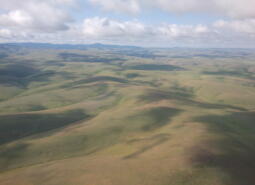
Columbia Plateau
The Columbia Plateau ecoregion was shaped by cataclysmic floods and large deposits of wind-borne silt and sand earlier in its geological history. It is dominated by a rolling landscape of arid lowlands dissected by several important rivers, and extends from the eastern slopes of the Cascades Mountains, south and east from the Columbia River to the Blue Mountains.
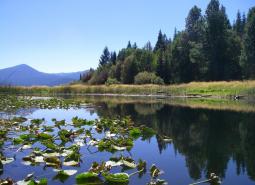
East Cascades
The East Cascade ecoregion extends from the Cascade Mountains' summit east to the warmer, drier high desert and down the length of the state. This ecoregion varies dramatically from its cool, moist border with the West Cascades ecoregion to its dry eastern border, where it meets sagebrush desert landscapes.
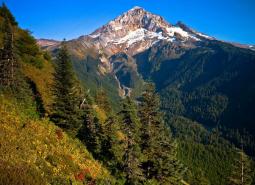
West Cascades
The West Cascades ecoregion extends from east of the Cascade Mountains summit to the foothills of the Willamette, Umpqua, and Rogue Valleys, and spans the entire length of the state of Oregon. It is largely dominated by conifer forests, moving into alpine parklands and dwarf shrubs at higher elevations.
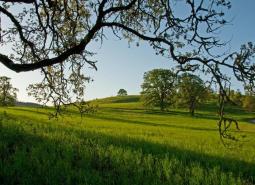
Willamette Valley
The Willamette Valley ecoregion is bounded on the west by the Coast Range and on the east by the Cascade Range. This long mostly level alluvial plain has some scattered areas of low basalt, and contrasts with productive farmland and large urban areas. It has the fastest-growing human population in the state resulting in challenges due to land-use changes.