White fairy poppy is a diminutive annual forb that is 2-16 cm tall with erect to ascending stems. The whorled basal leaves are 3-18 mm long, with a blade that’s linear-spatulate (appearing to have an ~10 mm petiole) and entire margins, while stem leaves are opposite and sessile. The flower receptacle is shorter than broad and expands into a small ring beneath the sepals. The petals are white, 1-5 mm long, and alternately obovate and oblanceolate with a rounded apex. There are 4-6 stamens in one series (row) and the anthers are widely elliptic to round. The linear fruit capsules of are 20-30 mm long with 0.5 mm seeds that are obovate-reniform.
Overview
- Species Common Name White fairy poppy
- Species Scientific Name Meconella oregana
- Federal Listing Status Species of Concern
- State Listing Status Threatened
Ecoregions
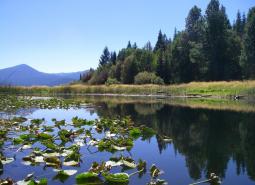
East Cascades
The East Cascade ecoregion extends from the Cascade Mountains' summit east to the warmer, drier high desert and down the length of the state. This ecoregion varies dramatically from its cool, moist border with the West Cascades ecoregion to its dry eastern border, where it meets sagebrush desert landscapes.

Klamath Mountains
The Klamath Mountains ecoregion covers much of southwestern Oregon, including the Klamath Mountains, Siskiyou Mountains, the interior valleys and foothills between these and the Cascade Range, and the Rogue and Umpqua river valleys. Several popular and scenic rivers run through the ecoregion, including the Umpqua, Rogue, Illinois, and Applegate rivers. Historically, this ecoregion is known …

West Cascades
The West Cascades ecoregion extends from east of the Cascade Mountains summit to the foothills of the Willamette, Umpqua, and Rogue Valleys, and spans the entire length of the state of Oregon. It is largely dominated by conifer forests, moving into alpine parklands and dwarf shrubs at higher elevations.