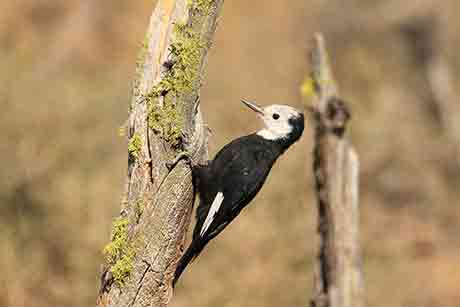
The White-headed Woodpecker (Dryobates albolarvatus) is a medium-sized woodpecker that is easy to recognize by its solid white head and throat. Its body is jet black, with a distinctive white wing patch on each side. Adult males have a small red patch on the back of the crown, while juveniles have a red spot in the middle of their white crown. These woodpeckers are 8.4 to 9.2 inches long and weigh between 2 and 2.3 ounces.
In flight, their white wing patches and dark back and rump help distinguish them from other woodpecker species. White-headed Woodpeckers are the only woodpecker that relies heavily on seeds from ponderosa pines. They extract seeds by wedging them into tree crevices and striking them with their strong bills. During the breeding season, they also feed on insects to meet their nutritional needs.
Overview
Species Common Name White-headed Woodpecker
Species Scientific NameDryobates albolarvatus albolarvatus
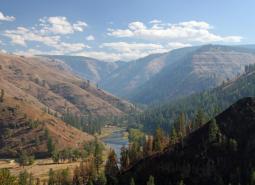
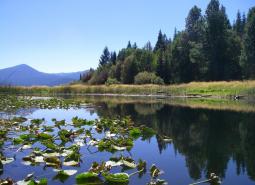
White-headed Woodpeckers are found in large tracts of open mature ponderosa pine woodlands. They require mature trees for foraging and snags for nesting. The species is a resident (nonmigratory) in Oregon.
Limiting factors
White-headed Woodpeckers have experienced population declines and local extirpations across their range. The primary threat is habitat loss and degradation, particularly the removal of large-diameter trees and snags, which are important for nesting and foraging but are also highly valued for timber. Additional limiting factors include habitat encroachment by smaller trees and shrubs, reduced recruitment of young pines into larger size classes, and fire suppression, which has disrupted the natural fire regime that historically maintained open ponderosa pine forests. Nest predation, often by small mammals including chipmunks and golden-mantled ground squirrels, is also a concern in areas with dense shrub cover and abundant downed wood.
Data gaps
• Assess distribution.
• Continue to evaluate impacts of forest management practices on woodpeckers and habitat suitability of managed forests.
• Quantify predation rates by individual predator species, and describe habitat relationships of rodent egg predators.
Conservation actions
• Retain existing (or manage to create) large tracts of open, mature woodland.
• Retain snags and high cut stumps.
• Eliminate or restrict fuelwood cutting of stumps and snags in suitable habitat.
Key reference or plan
PIF Focal and Imperiled Species. Altman et al. 2022. Read here
Mellen-Mclean, Kim, Barbara Wales, And Barbara Bresson (2013) A Conservation Assessment for the White-headed woodpecker (Picoides albolarvatus). USDA Forest Service, Region 6 USDI Bureau of Land Management, Oregon and Washington. Read here
Kozma, J. M., T. J. Lorenz, M. G. Raphael, K. L. Garrett, and R. D. Dixon (2020). White-headed Woodpecker (Dryobates albolarvatus), version 2.0. In Birds of the World (P. G. Rodewald and B. K. Keeney, Editors). Cornell Lab of Ornithology, Ithaca, NY, USA. Read here