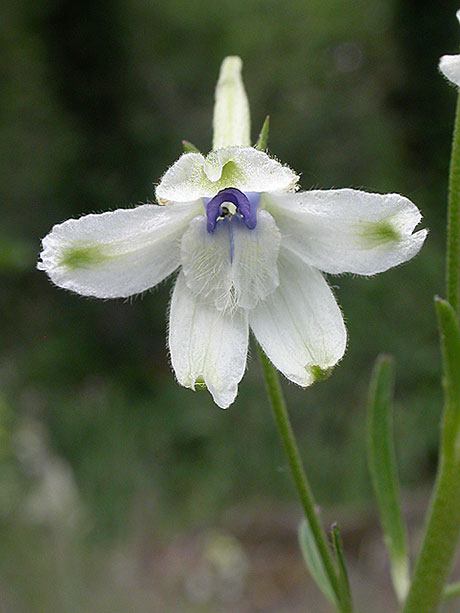
White rock larkspur is a slender perennial species 20-60 cm tall that grows from a cluster of tubers. Leaves are numerous and evenly distributed on the stem, with long petioles and lobed blades. The inflorescence is a narrow raceme bearing 6-30 nonglandular flowers. The sepals are white to cream, sometimes slightly greenish blue on the back and greenish at the tip, and cupped forward or spread laterally. The lower petals are white or faintly bluish tinged and long-hairy over the entire surface, the upper petals bluish to lavender-tipped. The follicles are 0.8-1.2 cm long, puberulent, and non-glandular.
Overview
- Species Common Name White rock larkspur
- Species Scientific Name Delphinium leucophaeum
- Federal Listing Status Species of Concern
- State Listing Status Endangered
Ecoregions
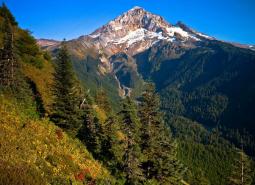
West Cascades
The West Cascades ecoregion extends from east of the Cascade Mountains summit to the foothills of the Willamette, Umpqua, and Rogue Valleys, and spans the entire length of the state of Oregon. It is largely dominated by conifer forests, moving into alpine parklands and dwarf shrubs at higher elevations.
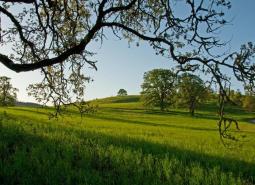
Willamette Valley
The Willamette Valley ecoregion is bounded on the west by the Coast Range and on the east by the Cascade Range. This long mostly level alluvial plain has some scattered areas of low basalt, and contrasts with productive farmland and large urban areas. It has the fastest-growing human population in the state resulting in challenges due to land-use changes.