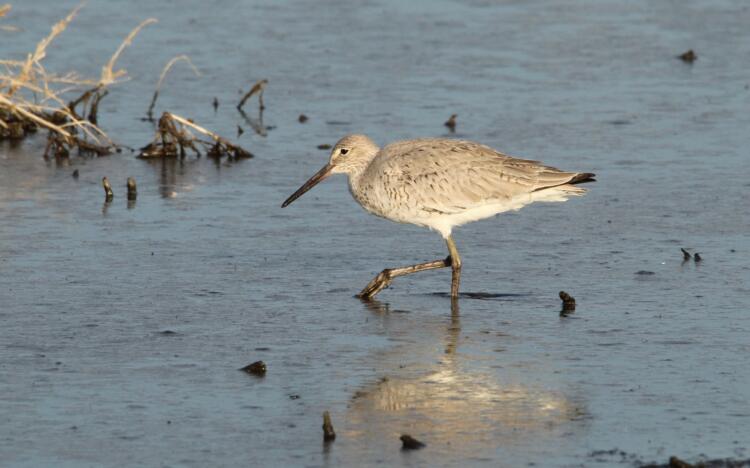
The Willet (Tringa semipalmata) is a large, gray to brownish-gray sandpiper with white lower base of tail and distinctive black-and-white wing stripe pattern. Sexes are similar. Taxonomic split; western population recognized as T. s. inornata (genetic divergence c. 700,000 years ago). Winters on the coast from Mexico to Chile and remain largely separate from the eastern subspecies – with some overlap.
Overview
- Species Common Name Willet
- Species Scientific Name Tringa semipalmata inornata
- State Listing Status Sensitive (pending)
Ecoregions
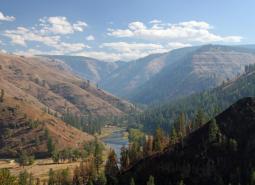
Blue Mountains
Located in NE Oregon, the Blue Mountains ecoregion is the largest ecoregion in the state. It provides a diverse complex of mountain ranges, valleys, and plateaus that extend beyond Oregon into the states of Idaho and Washington.
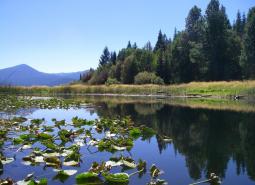
East Cascades
The East Cascade ecoregion extends from the Cascade Mountains' summit east to the warmer, drier high desert and down the length of the state. This ecoregion varies dramatically from its cool, moist border with the West Cascades ecoregion to its dry eastern border, where it meets sagebrush desert landscapes.
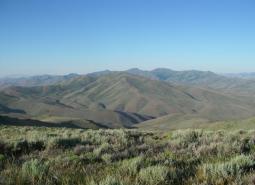
Northern Basin and Range
The Northern Basin and Range ecoregion covers the very large southeastern portion of the state, from Burns south to the Nevada border and from the Christmas Valley east to Idaho. It is largely a high elevation desert-like area dominated by sagebrush communities and habitats.