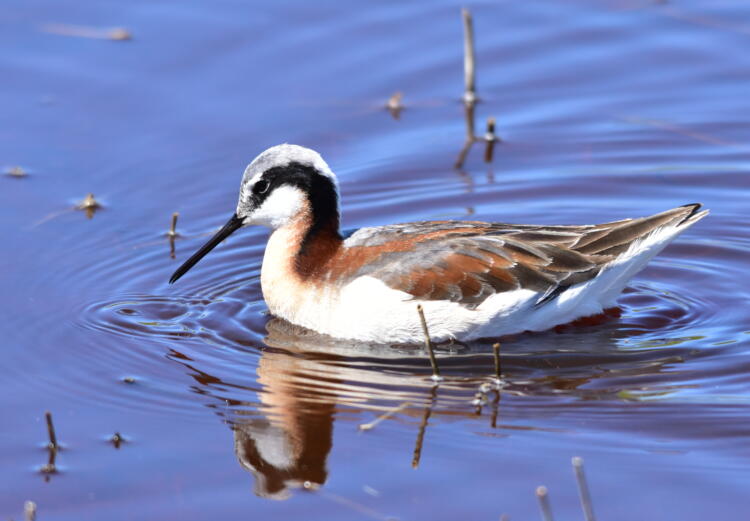
The Wilson’s Phalarope is the largest and most terrestrial of the three North American phalaropes. As with all phalaropes, females are larger and more brightly-colored than males. During nesting, females have pale blue/gray forehead and crown; white supercilium above the eye, borders black streak that passes from base of the bill, through and below the eye, sides of the neck; white streak from back of head, down nape to upper back; throat cinnamon buff. The scapulars and mantle are chestnut; wings gray brown and underparts and rump white; tail pale gray; bill black, legs gray/black. Breeding males are smaller and less bright. Breeds exclusively in N. America: its non-breeding distribution is Central and South America. After nesting, birds undertakes a molt migration with large populations staging on Lake Abert.
Overview
- Species Common Name Wilson's Phalarope
- Species Scientific Name Phalaropus tricolor
- Federal Listing Status Proposed
- State Listing Status Sensitive (pending)
Ecoregions
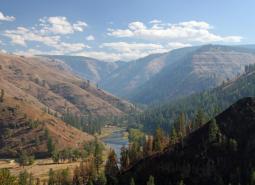
Blue Mountains
Located in NE Oregon, the Blue Mountains ecoregion is the largest ecoregion in the state. It provides a diverse complex of mountain ranges, valleys, and plateaus that extend beyond Oregon into the states of Idaho and Washington.
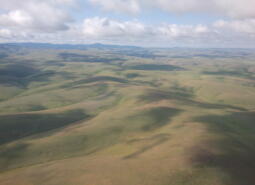
Columbia Plateau
The Columbia Plateau ecoregion was shaped by cataclysmic floods and large deposits of wind-borne silt and sand earlier in its geological history. It is dominated by a rolling landscape of arid lowlands dissected by several important rivers, and extends from the eastern slopes of the Cascades Mountains, south and east from the Columbia River to the Blue Mountains.
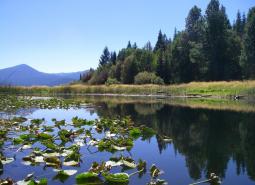
East Cascades
The East Cascade ecoregion extends from the Cascade Mountains' summit east to the warmer, drier high desert and down the length of the state. This ecoregion varies dramatically from its cool, moist border with the West Cascades ecoregion to its dry eastern border, where it meets sagebrush desert landscapes.
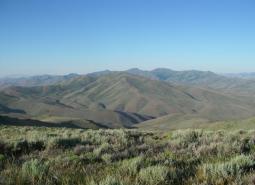
Northern Basin and Range
The Northern Basin and Range ecoregion covers the very large southeastern portion of the state, from Burns south to the Nevada border and from the Christmas Valley east to Idaho. It is largely a high elevation desert-like area dominated by sagebrush communities and habitats.
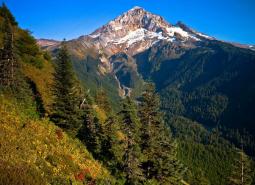
West Cascades
The West Cascades ecoregion extends from east of the Cascade Mountains summit to the foothills of the Willamette, Umpqua, and Rogue Valleys, and spans the entire length of the state of Oregon. It is largely dominated by conifer forests, moving into alpine parklands and dwarf shrubs at higher elevations.