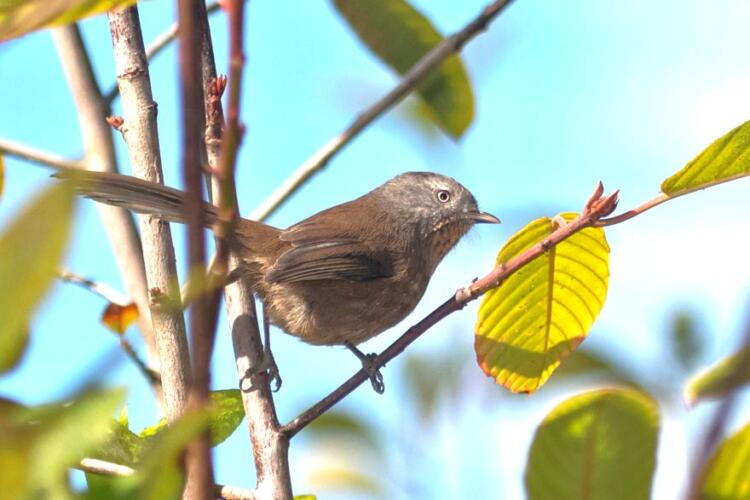
Found only on the west coast of Oregon and California, Wrentits are resident, very sedentary birds with secretive, skulking behavior, only emerging occasionally from cover. The Wrentit has been described as the most sedentary species in North America. The male and female are similar in appearance. Males and females look alike, with olive-brown plumage and streaks on a pale pinkish breast. They have a short, slightly curved horn-colored bill, a long, cocked tail, and long legs that give them a distinctive shape. Both sexes sing, and they form a tight, monogamous pair bond. The Wrentit is the only representative species of its family (parrotbills, Paradoxornithidae) in North America. In Oregon, two of the five recognized subspecies occur: Chamaea fasciata phaea on the south coast to the California border, and Chamaea fasciata margra in Jackson County.
Overview
- Species Common Name Wrentit
- Species Scientific Name Chamaea fasciata
- State Listing Status Sensitive (pending)
Ecoregions
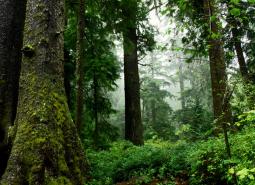
Coast Range
Oregon's Coast Range, known for its dramatic scenery, is extremely diverse, with habitats ranging from open sandy dunes to lush forests and from tidepools to headwater streams. It follows the coastline and extends east through coastal forest to the border of the Willamette Valley and Klamath Mountains ecoregions
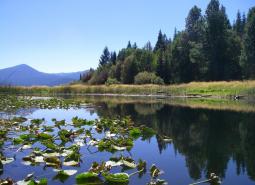
East Cascades
The East Cascade ecoregion extends from the Cascade Mountains' summit east to the warmer, drier high desert and down the length of the state. This ecoregion varies dramatically from its cool, moist border with the West Cascades ecoregion to its dry eastern border, where it meets sagebrush desert landscapes.
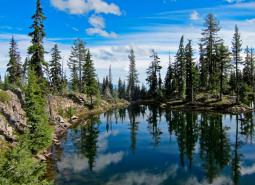
Klamath Mountains
The Klamath Mountains ecoregion covers much of southwestern Oregon, including the Klamath Mountains, Siskiyou Mountains, the interior valleys and foothills between these and the Cascade Range, and the Rogue and Umpqua river valleys. Several popular and scenic rivers run through the ecoregion, including the Umpqua, Rogue, Illinois, and Applegate rivers. Historically, this ecoregion is known …
Willamette Valley
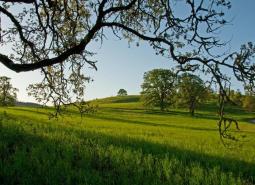
The Willamette Valley ecoregion is bounded on the west by the Coast Range and on the east by the Cascade Range. This long mostly level alluvial plain has some scattered areas of low basalt, and contrasts with productive farmland and large urban areas. It has the fastest-growing human population in the state resulting in challenges due to land-use changes.